How to Destroy the Future of Children
How to Destroy the Future of Children: From toxic parenting patterns to broken school systems — this in-depth article examines the real habits, environments, and societal failures that quietly ruin children’s potential. Backed by data and expert research.
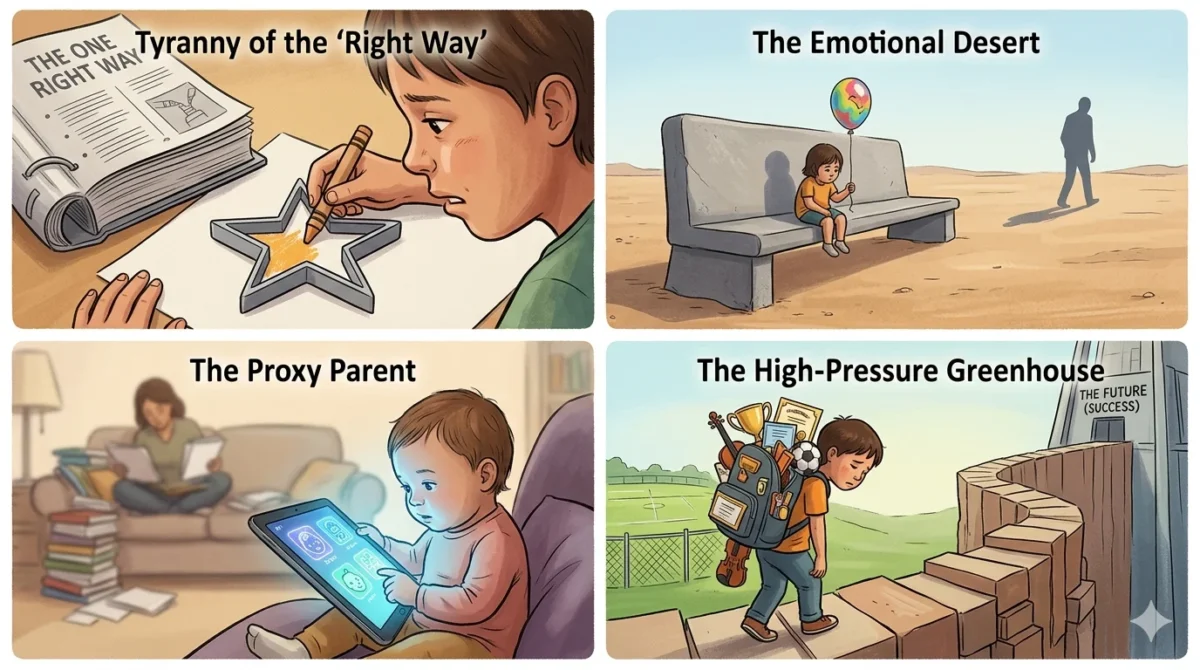
Nobody wakes up wanting to ruin a child’s future. That’s the uncomfortable truth sitting at the center of this whole conversation. Most of the damage done to children — the kind that quietly shapes them into anxious, disconnected, or struggling adults — doesn’t come from dramatic abuse or neglect. It comes from well-meaning people doing the wrong things, systems nobody questions, and a culture that’s slowly stopped listening to what kids actually need.
This isn’t a guide to be followed. It’s a mirror. Read it and see how many of these patterns already exist in your home, your school, your neighborhood, or your country’s policies.
How to Destroy the Future of Children 2026 : The Quiet Architecture of Failure
There’s no single moment that ruins a child. It’s architecture — a slow, invisible construction of small decisions, absent conversations, and environmental pressures that stack up over years. Researchers at Harvard’s Center on the Developing Child describe it as “toxic stress,” the kind that doesn’t come from one bad event but from sustained exposure to instability, criticism, pressure, and emotional unavailability.
When you look at the data, the picture is stark:
| Risk Factor | Prevalence | Source |
|---|---|---|
| Children experiencing chronic stress at home | 46% of U.S. kids | ACEs Study, CDC |
| Students who feel school is irrelevant to their lives | 65% | Gallup Student Poll |
| Children under 5 with 3+ hours daily screen time | 34% globally | WHO, 2024 |
| Adolescents reporting persistent feelings of loneliness | 40% | UNICEF Report 2023 |
| Children lacking access to quality early education | 175 million worldwide | UNICEF 2022 |
| Youth with undiagnosed mental health conditions | 1 in 5 | APA, 2024 |
These aren’t outliers. They’re the background noise of modern childhood.
Overprotection — When Love Becomes a Cage
The Helicopter Problem Nobody Talks About
Here’s something that sounds wrong but isn’t: protecting children from every discomfort is one of the most effective ways to cripple them. Not intentionally, not cruelly — but functionally, it works exactly like that.
When a child is never allowed to fail, they never learn that failure is survivable. and When they’re never bored, they never develop the internal resources to tolerate stillness. When every conflict is solved by a parent stepping in, they never figure out how to solve conflict themselves.
Dr. Jonathan Haidt, social psychologist and author of The Anxious Generation (2024), argues that the sharp rise in adolescent anxiety and depression that began around 2012 correlates directly with two things: the rise of smartphone-based childhood and the decline of unsupervised, risky, outdoor play.
Free play isn’t optional enrichment. It’s the developmental engine through which children learn risk assessment, emotional regulation, negotiation, and resilience. According to the American Academy of Pediatrics, unstructured play directly supports cognitive, physical, and emotional development — and its decline is measurable in clinical outcomes.
The numbers confirm it:
- Children in 1970 had, on average, significantly more freedom to roam their neighborhoods than children today. One landmark UK study found that the area a typical 8-year-old was permitted to roam unsupervised shrank by 90% between 1970 and 2020.
- A 2023 survey by the Aspen Institute found that only 36% of children regularly engage in free, unstructured outdoor play.
Screens, Scrolling, and the Attention Economy: How to Destroy the Future of Children
What the Devices Are Actually Doing
The screen debate often gets framed as a simple time question — “how many hours is too many?” But the real issue isn’t duration. It’s displacement and design.
Every hour a child spends passively consuming content is an hour not spent building social skills through real conversation, not developing fine motor control through physical activity, not learning emotional regulation through boredom, and not developing imagination through unstructured play.
The design is the other half. Social media platforms and short-video apps are engineered — using the same behavioral psychology techniques used in slot machines — to maximize engagement at the expense of user wellbeing. Children and teenagers, whose prefrontal cortices won’t finish developing until their mid-twenties, are among the most vulnerable targets.
The data on adolescent girls is particularly alarming. A 2023 study published in JAMA Pediatrics found that girls who spent more than 3 hours per day on social media had significantly elevated rates of depression and anxiety. Meta’s own internal research, leaked in 2021, acknowledged that Instagram made body image issues worse for a substantial portion of teenage girls using the platform.
| Age Group | Average Daily Screen Time | Recommended Limit (WHO) |
|---|---|---|
| Ages 2–4 | 2.4 hours | 1 hour |
| Ages 5–11 | 4.6 hours | 2 hours |
| Ages 12–17 | 7.2 hours | No specific limit, but quality matters |
Source: Common Sense Media Census, 2023; WHO Guidelines
The School System That Forgot Children
Measuring the Wrong Things for the Wrong Reasons: How to Destroy the Future of Children
What exists instead, in most countries, is a system optimized for compliance and measurement. Sit still. Memorize. Perform under pressure. Be evaluated on a narrow band of abilities — primarily linguistic and mathematical — while creativity, emotional intelligence, physical ability, and practical reasoning are treated as luxuries.
Sir Ken Robinson, the late education reformer, spent decades documenting how standardized schooling systematically kills creativity. His TED Talk on the subject remains the most-watched in the platform’s history — because it articulates something millions of parents and students feel but struggle to name.
According to a 2022 PISA analysis by the OECD, students who report low levels of engagement at school are three times more likely to drop out before completing secondary education. And yet school reform remains agonizingly slow.
The Homework Trap
There’s another quiet destroyer hiding in backpacks everywhere: excessive homework.
Research from Stanford University’s Graduate School of Education found that students who did more than approximately 1.5 to 2.5 hours of homework per night reported significantly higher levels of stress, physical health problems, and reduced time for family, friends, and activities they found meaningful — with no measurable academic advantage over those who did less.
Children need time after school to decompress, move their bodies, socialize, and simply be kids. When that time is consumed by more schoolwork, the result isn’t better education. It’s chronic stress, resentment of learning, and burnout — sometimes by age ten.

Emotional Neglect — The Invisible Wound
What Children Actually Need From Adults
Emotional neglect doesn’t look the way people expect. It rarely involves shouting or hitting. this looks like a parent who’s physically present but emotionally absent — scrolling through a phone while a child tries to tell them something. It looks like an adult who responds to a child’s sadness with “stop crying” or “you’re fine.” yet It looks like a household where feelings are never discussed, where vulnerability is treated as weakness, and where children learn that their inner world is an inconvenience to the adults around them.
The Adverse Childhood Experiences (ACEs) study — one of the largest investigations ever conducted into childhood trauma — found that emotional neglect and emotional abuse are among the most common and most damaging ACEs. Children who grow up emotionally unseen are significantly more likely to develop depression, anxiety, substance abuse issues, and relationship difficulties as adults.
Secure attachment — the feeling that there’s a safe, reliable adult who sees and responds to you — is the single most protective factor in child development. It doesn’t require perfection. It requires presence.
Poverty, Inequality, and the Lottery of Birth
No conversation about children’s futures is complete without acknowledging structural reality. Individual parenting choices matter, but they operate inside conditions that most families didn’t choose.
A child born into poverty faces nutritional deficits that affect cognitive development before kindergarten. They attend schools with fewer resources, live in neighborhoods with fewer safe spaces to play, and experience the chronic stress of financial instability throughout childhood. According to UNICEF, approximately 333 million children lived in extreme poverty as of 2023 — roughly 1 in 6 children worldwide.
The research on early childhood investment is unambiguous. Nobel laureate economist James Heckman has spent decades demonstrating that every dollar invested in quality early childhood programs returns between $7 and $13 in long-term social and economic benefit. And yet, globally, early childhood remains dramatically underfunded.
| Country | Pre-primary Education Spending (% GDP) | Child Poverty Rate |
|---|---|---|
| Norway | 1.8% | 3.6% |
| United States | 0.4% | 16.9% |
| Pakistan | 0.1% | 39.3% |
| Denmark | 2.0% | 3.7% |
| Sub-Saharan Africa avg. | 0.1% | 49.0% |
Source: UNESCO Education Finance Report 2023; UNICEF State of the World’s Children 2023
How to Destroy the Future of Children 2026 People Also Ask(FAQ’s)
Q: What are the most common ways parents unknowingly harm their children’s development? Overprotection that prevents healthy risk-taking, emotional unavailability, excessive screen time without boundaries, harsh criticism, and inconsistent discipline are among the most documented patterns in developmental psychology research.
Q: How does social media affect children’s mental health? Multiple peer-reviewed studies link heavy social media use in adolescents — particularly girls — to increased rates of depression, anxiety, and poor body image. The algorithmic design of these platforms is built to maximize engagement, not wellbeing.
Q: What is the impact of poverty on a child’s future? Poverty affects brain development, educational outcomes, physical health, and long-term earning potential. Children raised in poverty are significantly more likely to experience chronic stress and less likely to complete higher education.
Q: Can school systems damage children’s mental health? Yes. Excessive testing pressure, rigid curricula, lack of physical activity, and high homework loads have all been linked to increased stress and disengagement in school-aged children.
Q: What is the most protective factor in a child’s development? Research consistently points to secure attachment — having at least one stable, responsive, emotionally present adult in a child’s life — as the single most powerful buffer against adversity.
Authoritative References
- Harvard Center on the Developing Child — Toxic Stress: How Early Adversity Affects Lifelong Health (2023). developingchild.harvard.edu
- Haidt, J. — The Anxious Generation: How the Great Rewiring of Childhood Is Causing an Epidemic of Mental Illness (Penguin Press, 2024)
- American Academy of Pediatrics — The Importance of Play in Promoting Healthy Child Development (2023). aap.org
- WHO — Guidelines on Physical Activity, Sedentary Behaviour and Sleep for Children under 5 Years of Age (2024). who.int
- UNICEF — State of the World’s Children 2023: For Every Child, Vaccination. unicef.org
- CDC / Kaiser Permanente ACEs Study — Adverse Childhood Experiences: Looking at How ACEs Affect Our Lives and Society. cdc.gov/violenceprevention
- Heckman, J. — The Economics of Human Potential (University of Chicago, ongoing research). heckmanequation.org
- Common Sense Media — 2023 Census: Media Use by Tweens and Teens. commonsensemedia.org
- OECD/PISA — PISA 2022 Results: Learning During — and From — Disruption (2023). oecd.org
- Pope, D. — Overloaded and Underprepared: Strategies for Stronger Schools and Healthy, Successful Kids (Stanford University Press, 2015)